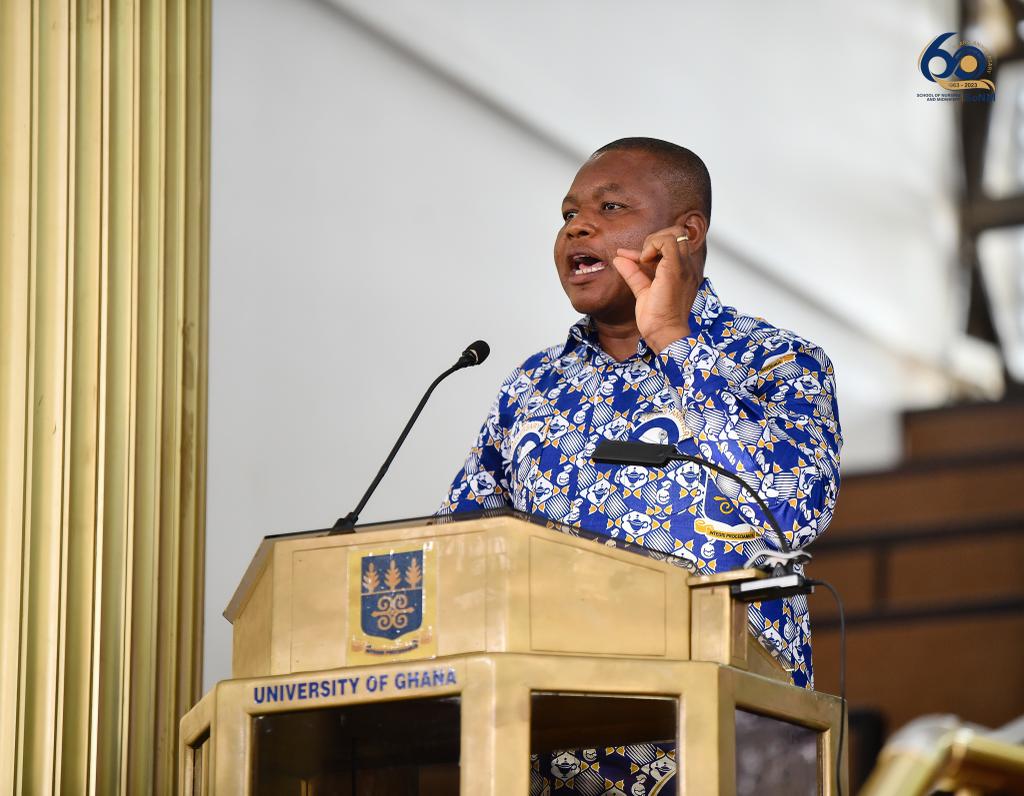
Experienced and specialised health workers leaving are settling for jobs abroad below their skill set – Prof Avoka Asamani
The increasing number of health workers leaving Ghana for positions well below their skill level is a grave concern to health experts.
Prof
Experienced and specialised health workers leaving
The increasing number of health workers leaving Ghana for positions well below their skill level is a grave concern to health experts.
Prof James Avoka Asamani, a World Health Organisation Health Economist and Health Systems Scientist, is one of the specialists raising concerns.
“Some nurses/midwives leaving Ghana are settling for jobs abroad well below their skill set. Migrants accepting lower level jobs, particularly in adult and social care, is not just a loss for our health sector, but it is also a gross underutilisation of their abilities.”
Prof Asamani argues that, in comparison to the country’s current production of health personnel, it may appear insignificant. However, the situation necessitates interventions.
He added that others who are in the vast majority wish to stay but are pushed to migrate due to circumstances primarily unsatisfactory working conditions.
Prof Asamani stated that government must establish a climate in which the final two feel respected, driven, and urged to stay and serve our country.
“A strong and up-to-date curriculum is essential for nursing/midwifery education, with regular review to incorporate advancements in health, emerging technologies, evidence-based practices, and cultural relevance/competence.”
Prof Asamani has THEREFORE proposed that basic training for nurses and midwives be upgraded to the first-degree level, as well as rationalising and diversifying training capacity across general and specialities to align with the capacity to absorb and export in line with population and health system needs.
“Nursing education requires competent and knowledgeable faculty members who can effectively teach and mentor students. If we want excellence, all tutors should aspire to have at least a master’s and all lecturers with PhDs.
“Mandatory clinical practice for faculty and tutors (who teach clinical courses) to possess strong clinical expertise to ensure that students receive adequate practical training.
Prof Asamani has urged the Ghanaian health sector to embrace the power of technology and artificial intelligence (AI) for blended learning, in which expertise can be shared with students regardless of location.
“AI systems such as ChatGPT and the like are here with us. It is no longer if, but how we should use it. If not already done, it is now urgent to develop guidelines for the ethical use of AI to enhance learning and research in nursing and midwifery education – indeed, in education generally.
Prof Asamani also called on the government to invest in the training of thousands of nurses and midwives at home and to use available evidence to prioritize graduate-level nurse/midwife specialization.
“Fully sponsors nurses/midwives seeking specialisation training in Ghana. Create regulations and other incentives for the private sector to employ trained nurses (the private sector trains 40% but employs 10%).
“Set up a “Nursing Research and Innovation” fund to stimulate and sustain nursing research and innovation.”
---DECRYPTED---